

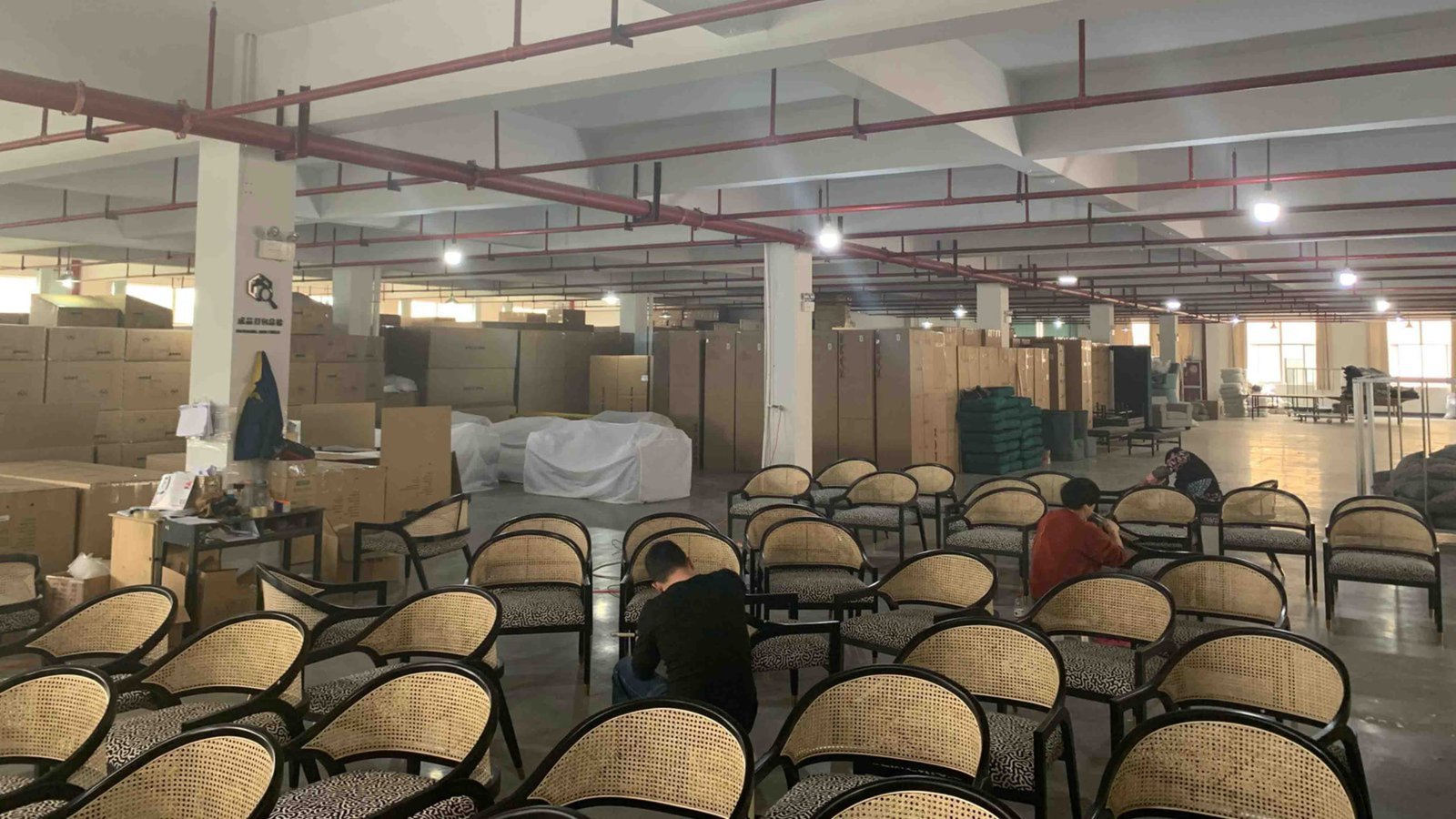
Choosing a sofa manufacturer in China is not simply a matter of comparing quotations. The right partner must be able to translate your design into a repeatable product, control upholstery quality, meet the requirements of your destination market and deliver the right container mix on time.
The short answer: evaluate a Chinese sofa manufacturer across eight areas: product fit, engineering capability, material transparency, sampling, quality control, compliance, production capacity and export service. Never place a production order based on catalogue photos and price alone. Approve a physical sample, a signed specification sheet and a clear inspection standard first.
Why China Is a Major Sourcing Base for Sofas
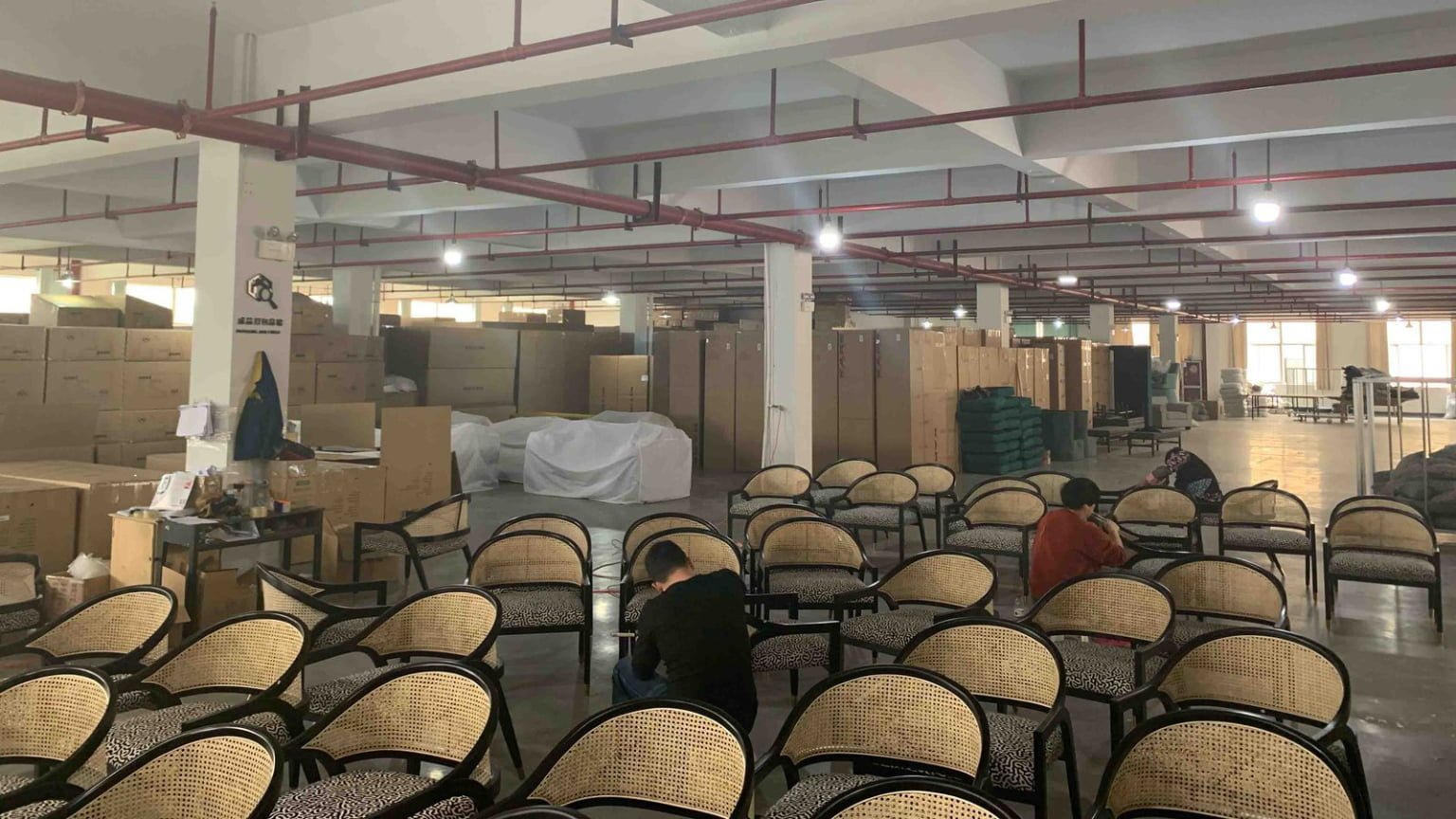
China has developed deep supply chains for upholstered furniture. A sofa factory can often source timber, plywood, metal components, foam, fabric, leather, mechanisms, cartons and hardware within the same manufacturing region.
This creates several advantages for furniture retailers, wholesalers, importers and project buyers:
- Broad design and material options
- OEM and ODM product-development capability
- Scalable production for complete collections
- Access to specialist fabric, foam, timber and metal suppliers
- Export experience across different international markets
- Opportunities to consolidate sofas, chairs and complementary furniture
However, the Chinese sofa-manufacturing market is highly varied. Two suppliers may quote visually similar sofas while using different frame structures, foam densities, suspension systems and fabric specifications. These differences affect comfort, durability, customer claims and total landed cost.
1. Start With Product and Market Fit
First, confirm that the manufacturer regularly produces your type of sofa. A factory focused on high-volume recliners may not be the best choice for a tailored contemporary sofa. Likewise, a workshop producing premium feather-filled upholstery may struggle to meet the price architecture of a promotional retail programme.
Ask to see recent and relevant production examples in areas such as:
- Fixed, modular, sectional or sofa-bed construction
- Fabric, leather or performance upholstery
- Loose-cover or fully upholstered designs
- Timber-leg, metal-leg or plinth-base models
- Residential, hospitality or commercial applications
- Entry-level, mid-market or premium positioning
At Girlande Home, our active assortment centres on contemporary sofas, including two-seat and three-seat formats and coordinated collections, alongside dining and occasional seating. This category focus helps us assess not only appearance, but also seat comfort, upholstery execution, packaging volume and collection consistency.
2. Evaluate Engineering, Not Just Appearance
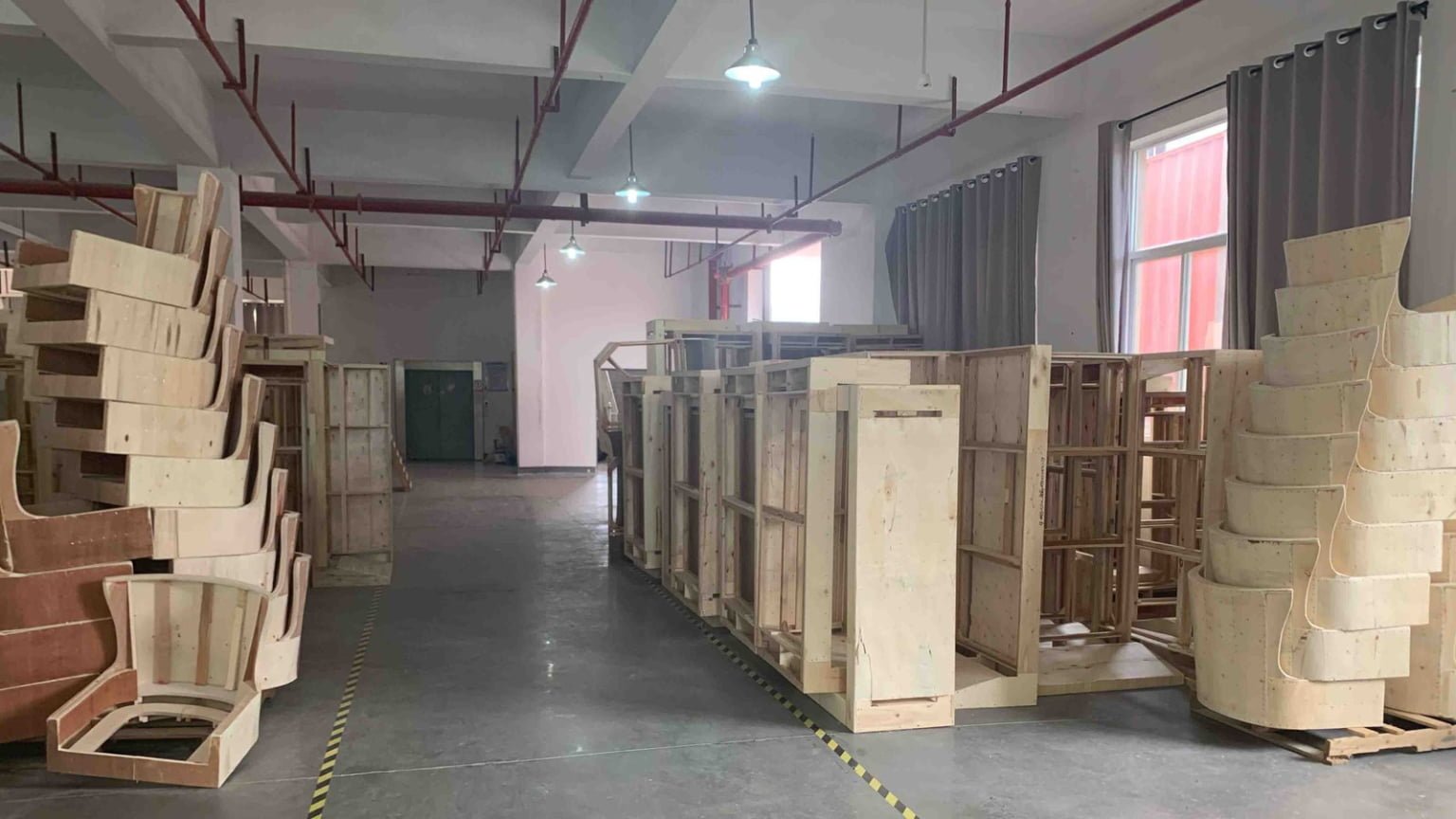
A capable sofa manufacturer should be able to explain what is inside the product. Request a construction breakdown before comparing prices.
| Component | What to Verify | Why It Matters |
|---|---|---|
| Frame | Timber or plywood species, moisture level, thickness and joint method | Controls structural strength and long-term stability |
| Suspension | Webbing, sinuous springs or another support system; gauge and spacing | Affects comfort, noise and seat life |
| Foam | Density, hardness and layer construction | Determines comfort consistency and recovery |
| Cushions | Fixed or loose; foam, fibre or feather composition | Influences appearance, maintenance and cost |
| Upholstery | Composition, weight, abrasion, pilling and colourfastness | Reduces premature wear and fabric claims |
| Legs and hardware | Material, finish, fixing method and load performance | Prevents wobble, breakage and assembly issues |
| Packaging | Carton dimensions, protection method and high-risk areas | Affects damage rates and container economics |
Do not accept descriptions such as “high-density foam” or “solid wood frame” without measurable specifications. Ask the supplier to record the agreed construction in a product specification sheet and link every approved material to a code or physical swatch.
3. Check Material Transparency and Traceability
Material substitution is one of the largest risks in upholstered-furniture sourcing. The approved sample may be correct, but bulk production can drift if the bill of materials is incomplete.
Your supplier should be able to identify:
- Fabric supplier, article number, colour and dye lot
- Fabric composition, weight, abrasion and performance data
- Foam supplier, density and hardness by layer
- Frame materials and critical dimensions
- Leg finish and hardware references
- Labels, care instructions and packaging marks
For natural timber and upholstery, agree acceptable variation before production. “No variation” is rarely realistic. A signed limit sample is more useful than a vague promise.
4. Use Sampling as a Risk-Control Process
A sample is not only for approving the appearance. It is the first complete test of the factory’s interpretation, engineering capability and communication.
Review the sample against a written checklist:
- Overall dimensions and seat dimensions
- Sitting comfort and cushion recovery
- Symmetry and component alignment
- Seam position, stitch quality and piping
- Fabric direction, shade and tension
- Arm and back stability
- Leg alignment and floor contact
- Mechanism operation, where applicable
- Assembly time and instruction clarity
- Carton size, protection and packed weight
Photograph every approved detail and record all changes. The final “golden sample,” specification sheet, bill of materials, colour swatches and packaging standard should form one approval pack.
5. Verify Quality Control at Multiple Stages
Final inspection alone is too late to catch many sofa problems. Quality should be controlled at incoming-material, frame, upholstery, finished-product and packing stages.
Incoming-material inspection
Check fabric colour and defects, foam specifications, timber condition, metal finish and hardware quantity before production begins.
In-process inspection
Verify frame dimensions and joints before upholstery hides the structure. Check suspension, foam layers, sewing and critical alignment during assembly.
Finished-product inspection
Assess appearance, dimensions, comfort, stability, workmanship, labels and product function against the approved sample and specification.
Packaging and loading control
Confirm carton measurements, protective materials, shipping marks, hardware packs and loading quantity. For bulky products such as sofas, packaging CBM can materially change the landed cost.
Ask who performs each check, what evidence is recorded and how non-conforming products are isolated and corrected. For a new supplier or design, consider an independent pre-shipment inspection.
6. Match Compliance to the Destination Market
There is no single certificate that makes a sofa suitable for every country. Requirements depend on the product type, materials, intended use and destination market.
Depending on the project, buyers may need to discuss standards or requirements relating to:
- Upholstered-furniture flammability, such as EN 1021 or relevant BS requirements
- Structural strength, durability and safety
- REACH substances of very high concern for the European Union
- California Proposition 65 for products sold into California
- Timber-sourcing documentation, including FSC claims where required
- Textile programmes such as OEKO-TEX where requested
- Product labelling, care instructions and local importer obligations
Do not rely on a certification logo shown in a catalogue. Request a complete and current report, confirm that the tested model and materials match your order, and verify the laboratory and test method. If a material changes, check whether the existing report remains valid.
Girlande Home’s product-development records are structured to capture requirements commonly requested across international markets, including EN and BS fire-performance discussions, REACH, FSC, OEKO-TEX and California Proposition 65. However, the required test plan must always be confirmed for each product and destination before order placement.
7. Assess Capacity, Lead Time and Communication
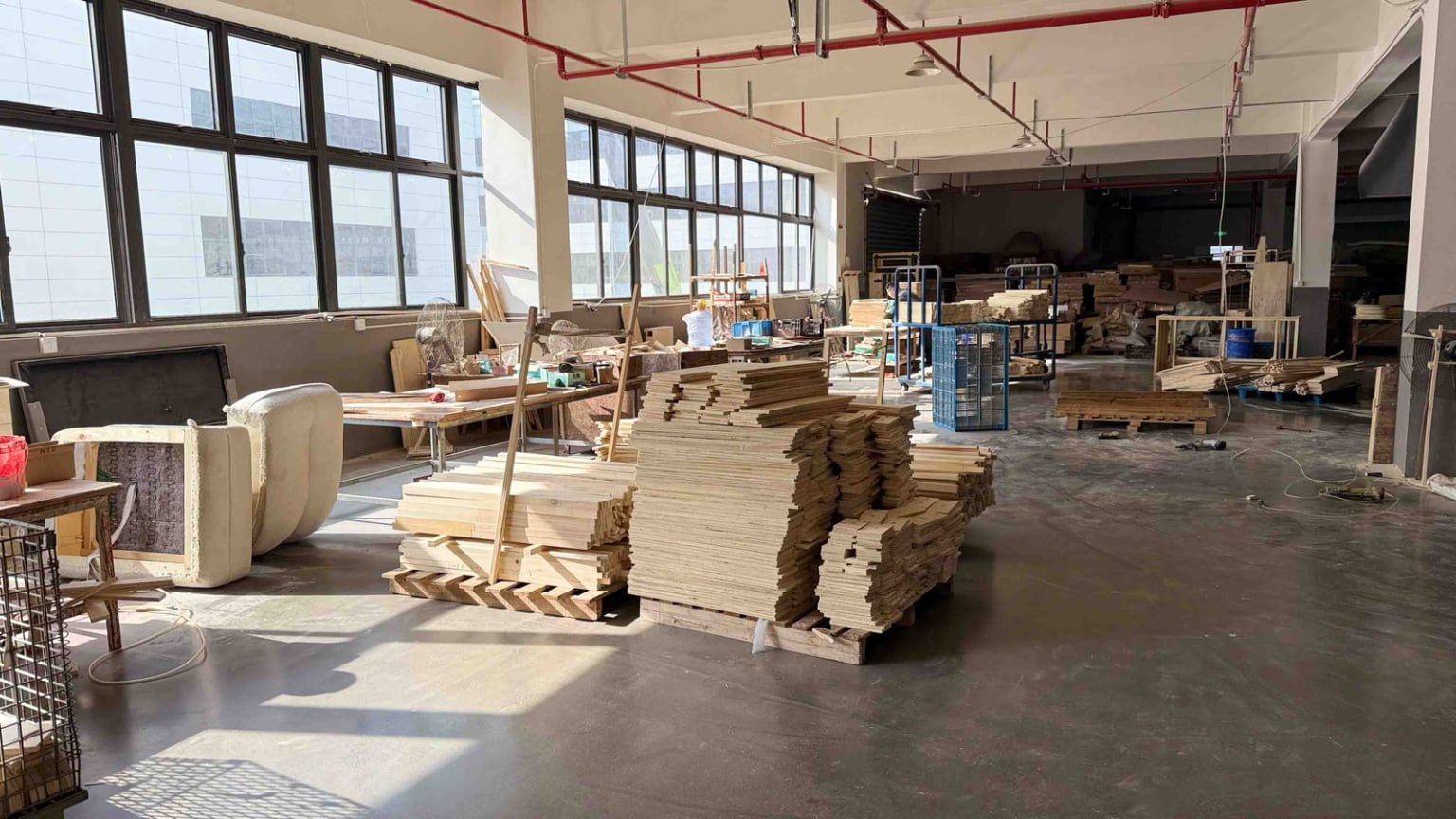
Capacity is more than the number of workers or production lines. Ask how the factory plans fabric arrival, frame production, sewing, upholstery, finishing, inspection and packing.
Useful questions include:
- What is the normal sample-development time?
- What is the production lead time after sample and material approval?
- Which materials have long minimums or lead times?
- How is capacity allocated during peak season?
- What happens if fabric fails inspection or arrives late?
- How often will the supplier provide production updates?
Girlande Home’s current product records use an indicative production lead time of approximately 45 days for active sofa and seating items. Actual timing must be reconfirmed after the design, materials, quantity, testing and packaging requirements are fixed.
Good communication is measurable. Look for accurate meeting notes, version-controlled specifications, prompt disclosure of problems and clear ownership. A supplier that says “yes” to every request but documents nothing creates avoidable risk.
8. Compare Total Landed Value, Not the Lowest FOB Price
The cheapest quotation may produce the highest total cost once you include customer claims, replacement stock, inspection costs, packaging waste and poor container utilisation.
Compare potential manufacturers using a total-value scorecard:
| Evaluation Area | Suggested Weight |
|---|---|
| Product and design fit | 15% |
| Construction and material quality | 20% |
| Sample accuracy | 15% |
| Quality-control system and traceability | 15% |
| Compliance capability | 10% |
| Lead time and capacity | 10% |
| Packaging and container efficiency | 10% |
| Communication and service | 5% |
Adjust these weights to suit your business model. An online retailer may give more weight to packaging and easy assembly. A design-led brand may prioritise sampling and upholstery finish, while a hospitality buyer may place greater emphasis on testing and project delivery.
Red Flags When Choosing a Sofa Supplier in China
Be cautious if a supplier:
- Refuses to disclose the internal construction
- Quotes before understanding dimensions, fabric or foam requirements
- Cannot produce consistent specifications or revision records
- Uses certification logos but will not share complete reports
- Will not allow an inspection or factory visit
- Changes materials without written approval
- Provides no corrective-action process
- Gives an unusually short lead time without a production plan
- Cannot explain carton dimensions or container loading
- Pushes for a bulk order before sample approval
One red flag may have a reasonable explanation. Several together usually indicate a system problem.
12-Point China Sofa Manufacturer Checklist
Before selecting a sofa manufacturer in China, confirm that you have:
- ✓ A clear target customer, price point and destination market
- ✓ Evidence of relevant sofa-production experience
- ✓ A complete product specification and bill of materials
- ✓ Verified fabric, foam, frame, suspension and hardware details
- ✓ An approved physical sample and signed change record
- ✓ A market-specific compliance plan
- ✓ Agreed tolerances and workmanship criteria
- ✓ Defined in-process and pre-shipment inspections
- ✓ Confirmed MOQ, production lead time and material lead times
- ✓ Approved packaging and carton dimensions
- ✓ Calculated container quantity and estimated landed cost
- ✓ Written procedures for defects, claims and corrective action
Why Work With Girlande Home?
Girlande Home supports international furniture buyers with a curated range of contemporary sofas and seating developed in China. Our approach connects product selection with the details that determine commercial success: specifications, material options, sample development, quality checkpoints, packaging data and destination-market requirements.
Our sofa records cover collection-level products, two-seat and three-seat formats, fabric references, packed dimensions, weights and CBM. This product-data discipline is designed to make supplier comparisons, order decisions and shipping calculations clearer for buyers.
If you are developing a new sofa collection or reviewing your existing China supply base, send us your target design, dimensions, material preference, quantity, destination market and required delivery date. We can then discuss suitable products, customisation options and the next sampling step.
Looking for a reliable sofa manufacturer in China?
Frequently Asked Questions
How do I find a reliable sofa manufacturer in China?
Shortlist suppliers with relevant product experience, then verify their factory, construction details, material records, samples, quality-control process, test reports, capacity and export history. Approve a physical sample and specification pack before bulk production.
What should I ask a Chinese sofa manufacturer?
Ask about frame construction, suspension, foam density, fabric performance, customisation, MOQ, sample cost, lead time, compliance, inspections, packaging, container quantity, payment terms and the process for handling defects.
What is the typical lead time for sofa manufacturing in China?
Lead time varies by design, materials, order quantity and season. As a working reference, Girlande Home’s current active sofa and seating records use approximately 45 days, subject to final approval and material availability.
Should I visit the sofa factory before ordering?
A factory visit is valuable, especially when evaluating a new or strategic supplier. However, it should complement documented specifications, sample approval and inspections. A qualified third party can also perform an audit or inspection when travel is impractical.
How can I protect sofa quality during mass production?
Create a signed approval pack, control material codes, inspect hidden construction before upholstery, conduct in-process checks and complete a pre-shipment inspection against the golden sample and agreed tolerances.
Can a China sofa manufacturer make custom designs?
Many manufacturers offer OEM or ODM development. Confirm ownership of drawings and tooling, expected development rounds, sample charges, MOQs, material minimums and whether design exclusivity is available before sharing the full brief.